
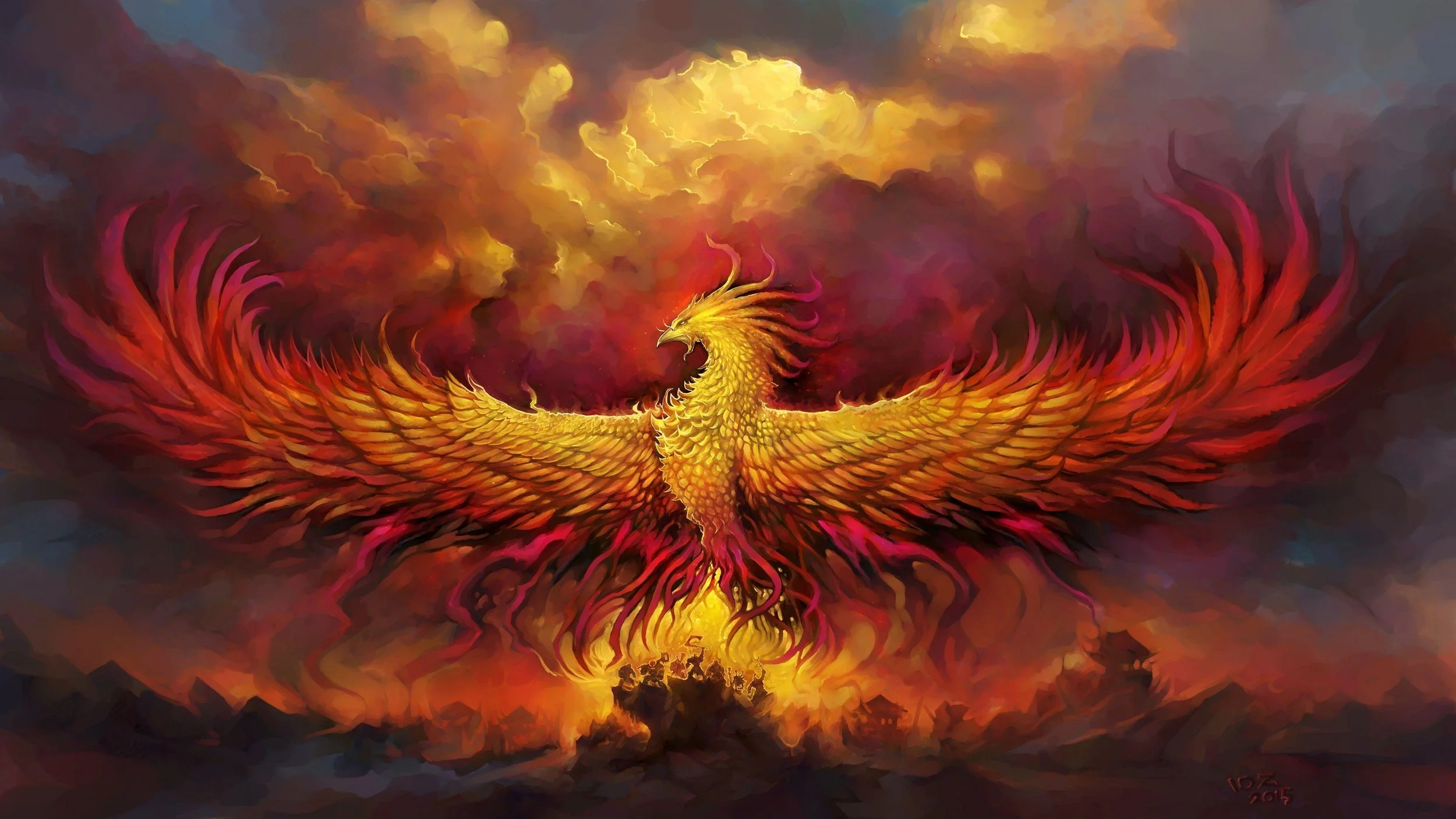
The symbolism behind the Phoenix
The phoenix is the ultimate symbol of hope in the face of destruction. It tells us that endings are not final—they are the necessary fuel for new beginnings.
Cultural variations
Ancient Egypt (Bennu Bird)
The concept likely originated or was heavily influenced by the Egyptian Bennu, a heron-like bird associated with the sun god Ra and the creation myth of Heliopolis. It symbolized the rising sun, resurrection, and the annual flooding of the Nile (renewal of the land). The Greeks later adapted this into the "phoenix" (from Greek phoinix, meaning "purple" or linked to Phoenicia).
Greek and Roman Mythology
The classical phoenix (Phoenix) was described by authors like Herodotus, Ovid, and Pliny the Elder. It was said to live in Arabia or India, be the size of an eagle, with brilliant red, gold, and purple plumage. Its rebirth was tied to cycles of time and cosmic renewal.
Chinese Mythology (Fenghuang)
Often translated as "Chinese phoenix," the Fenghuang is a majestic bird (usually paired with the dragon) that symbolizes virtue, grace, harmony, and the union of yin and yang. It represents the empress (while the dragon represents the emperor) and appears during times of prosperity or the rise of a great ruler. Fenghuang is also known as Empress, yin (feminine), grace, virtue, beauty, earth/prosperity
A symbol of transformation that honors both individual resilience and restored harmony.